Location :
Plot 445,Old Dar Es Salaam Road,
Kigurunyembe Mizambarauni

Rural Women Cultivating Change (RWCC) in East Africa is a program funded by SeedChange and Government of Canada through Global Affairs Canada. The program will strengthen leadership of smallholder farm women and their participation in decision-making processes, including women’s and farmers’ rights and climate adaptation, and enhance benefits for rural women in climate resilient and local food systems. It will focus on investments that improve women’s access and control over productive resources (land, capital, inputs, infrastructure) and promote agroecological approaches to achieving food security and improved livelihoods.
The Program targets remote rural regions of Ethiopia, Kenya and Tanzania where farming is the primary occupation and principal use of women’s labour, to undertake work at the intersection of women’s rights and climate adaptation. The Project will target a number of areas, including North Wollo Zone of Amhara Region in Ethiopia; Baringo, Nakuru, Kakamega, Laikipia and Kitui counties in Kenya; and Morogoro and Gairo District Councils of Morogoro, Babati and Mbulu District Councils of Manyara and Mwanga and Same District Councils of Kilimanjaro Regions in Tanzania. The Project will work in collaboration with women’s rights organizations (WROs) and agricultural based organizations to support climate adaptation, increase food security, enhance gender equality, reduce sexual and gender-based violence (SGBV), and improve livelihoods for rural women.
The program will invest in women’s economic productivity, which will lead to enhanced ecosystem resilience, household food and livelihood security, and economic opportunity. It will build the knowledge, skills and confidence of rural women farmers, and assist them to identify and make linkages to value chain opportunities. The Program empower women and encourage gender-transformative change, through the use of agroecological approaches that encourage equitable production, resource management, and market access. Agroecological practices are central to the climate adaptation strategy that the project will adopt to address climate change and advance women’s rights. Activities will include the promotion of community-based water conservation, on-farm crop diversification, tree planting, soil conservation, women-led participatory crop diversity development, the use of local designs, skills and materials for construction of small physical structures, and community seed banking.
The Program will use a rights-based framework with key attention to equality and, non-discrimination, participation and inclusion, transparency and accountability, and developing the human rights capacity of key stakeholders. Young and adult women in all their diversity in the targeted areas will be made aware of their rights and the obligations of duty bearers. Transparency and accountability will receive attention through the work with and capacity building of duty-bearers and responsibility holders. Women rights-holders will be encouraged to hold others accountable by taking up leadership roles and women and men will reflect on women’s rights and masculinities. SGBV survivor sensitivity will be a key element of capacity building. Diverse women and men and local community-based organizations, women’s rights organizations and movements will be trained in advocacy to influence local government implementation of women’s and farmers’ rights and promote women’s control over resources.
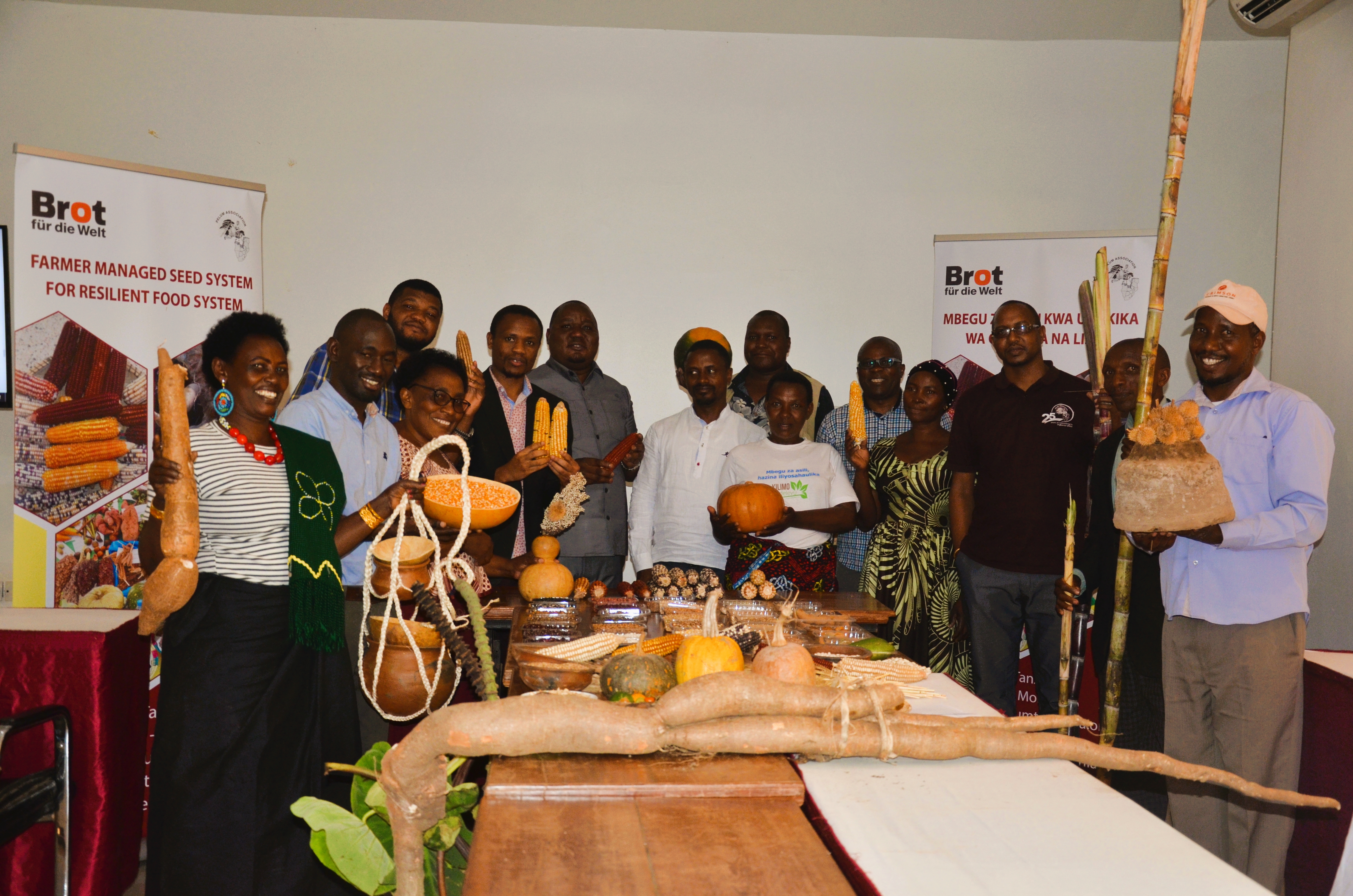
The Program will engage 24,077 diverse young and adult rural women, and 8,151 diverse young and adult rural men, with a particular focus on young and adult rural women farmers with varied intersectional aspects of identity (including the poorest of the poor, female heads of households, single teenage and never-married mothers, widows, divorced rural women, pastoralists, and survivors of SGBV) and young and adult rural men. Ultimately, the Program will directly benefit 93,070 rural people in 16,639 households. The estimated number of indirect beneficiaries, who will be reached through awareness campaigns, policy advocacy, seed and food fairs, road shows, and other activities, is estimated to be approximately 10,073,000 people.
The Project has three intermediate outcomes:
Intermediate outcome 1100: ‘Enhanced and more systematic engagement of and by diverse young and adult rural women from FHH and MHH in public leadership and gender-transformative decision-making processes including women’s and farmers’ rights and climate adaptation’. Within this intermediate outcome, two immediate outcomes have been identified: (1110) increased capacity and opportunity for leadership of a diversity of young and adult rural women smallholders in farmer-led community-based organizations (CBOs), networks and collective enterprises that focus on agroecology, farmer seed systems, and rural women’s empowerment; and (1120) increased knowledge, skills, and opportunities for diverse young and adult rural women and men to advocate for gender-transformative change in institutional and public policy decision making processes.
Intermediate outcome 1200: Strengthened prevention of and response to sexual and gender-based violence (SGBV), including traditional harmful practices (THPs), by individuals (f/m) and state/civil society actors. Within this intermediate outcome, two immediate outcomes have been identified: (1210) increased awareness and knowledge of young and adult men and women, boys and girls in rural communities of women’s rights related to SGBV; and (1220) Increased capacity of local providers (e.g. government agencies, CSOs) to prevent and respond to SGBV for women and men in rural communities.
Intermediate outcome 1300: ‘Enhanced benefit for young and adult women, particularly from FHHs, in climate-resilient and local food systems including income generation’. Within this intermediate outcome, two immediate outcomes are foreseen: (1310) enhanced knowledge, skills and opportunities for young/adult rural women, particularly from FHHs, in agroecological food and seed production, biodiversity-based marketing, entrepreneurship, and income generation; and (1320) increased support for diverse young and adult rural women's access to and control over productive resources in rural institutions, CBOs, and farmers' groups
.jpg)
.jpg)